
 Posted by
 Preparing for the JLPT N2 requires more than memorizing individual words. You need to understand how vocabulary is used in conversations, workplaces, schools, and everyday situations. Learning a few new words every day is an effective way to expand your vocabulary while improving your reading, listening, and speaking skills.
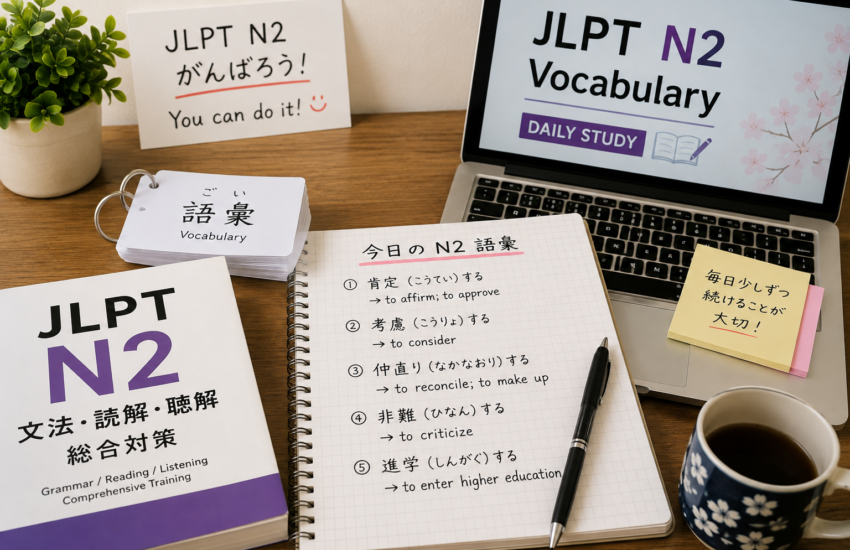
In today’s Daily JLPT N2 vocabulary lesson, you’ll learn five practical Japanese words that frequently appear in formal conversations, news articles, and academic contexts. Each word includes its meaning, example sentence, and practical usage to help you remember it naturally.
Table of Contents
- 肯定(こうてい)する
- 考慮(こうりょ)する
- 仲直り(なかなおり)する
- 非難(ひなん)する
- 進学(しんがく)する
- Daily Conversation
- Common Mistakes
- Vocabulary Summary
- Study Tip
- FAQ
1. 肯定(こうてい)する — To Affirm; To Approve
Meaning
肯定する means to affirm, approve, or express agreement with an opinion or idea. It is often used in formal discussions, meetings, and written Japanese.
Example
彼の意見を肯定しました。
(かれ の いけん を こうていしました。)
Translation:
I affirmed his opinion.
Related Expression
- 肯定的(こうていてき)— Positive; affirmative
2. 考慮(こうりょ)する — To Consider
Meaning
考慮する means to carefully consider or take something into account before making a decision. This expression is frequently used in business, education, and official communication.
Example
みんなの気持ちを考慮してください。
(みんな の きもち を こうりょしてください。)
Translation:
Please consider everyone’s feelings.
Common Usage
- 考慮に入れる
- 十分考慮する
3. 仲直り(なかなおり)する — To Reconcile
Meaning
仲直りする means to make up or become friends again after an argument. It is commonly used in daily conversations.
Example
友達と仲直りしました。
(ともだち と なかなおりしました。)
Translation:
I made up with my friend.
Similar Expression
- 仲がいい — To have a good relationship
4. 非難(ひなん)する — To Blame; To Criticize
Meaning
非難する means to criticize or blame someone for their actions. It often appears in newspapers and news reports.
Example
彼の行動を非難しました。
(かれ の こうどう を ひなんしました。)
Translation:
I criticized his behavior.
Common Usage
- 強く非難する
- 世間から非難される
5. 進学(しんがく)する — To Enter Higher Education
Meaning
進学する means to continue studying by entering a higher level of education, such as university or graduate school.
Example
来年、大学に進学します。
(らいねん、だいがく に しんがくします。)
Translation:
Next year, I will enter university.
Related Vocabulary
- 大学院(だいがくいん)— Graduate school
- 入学(にゅうがく)— Admission
Daily Conversation
A: 来年、大学に進学する予定です。
B: おめでとうございます!先生の意見も考慮しましたか。
A: はい。そして、家族も私の決定を肯定してくれました。
Translation
A: I’m planning to enter university next year.
B: Congratulations! Did you also consider your teacher’s advice?
A: Yes. My family also supported my decision.
Why Study Daily JLPT N2 Vocabulary?
Building your Daily JLPT N2 vocabulary through consistent practice helps improve your reading, listening, and speaking skills. Reviewing Daily JLPT N2 vocabulary every day also increases your confidence when preparing for the JLPT N2 exam and using Japanese in real-life situations.
Common Mistakes
❌ 肯定する does not always mean simply saying “yes.” It means to affirm or support an opinion or idea.
❌ 非難する is stronger than simply disagreeing. It expresses criticism or blame.
❌ 進学する refers to continuing education, while 入学する emphasizes enrolling in a school.
Vocabulary Summary
| Japanese | Reading | Meaning |
| 肯定する | こうていする | To affirm |
| 考慮する | こうりょする | To consider |
| 仲直りする | なかなおりする | To reconcile |
| 非難する | ひなんする | To criticize |
| 進学する | しんがくする | To enter higher education |
Practical Study Tip
Practice these five words by creating one original sentence for each. Reading them aloud and reviewing them regularly will help you remember both their meanings and natural usage in conversations.
Frequently Asked Questions
Is this vocabulary suitable for the JLPT N2 exam?
Yes. These words are commonly studied by learners preparing for the JLPT N2 level.
How can I remember advanced vocabulary?
Use each word in a sentence, review it regularly, and try to recognize it while reading Japanese articles or books.
Should I study vocabulary together with grammar?
Yes. Combining vocabulary with grammar patterns helps you understand how words are naturally used.
How many JLPT N2 words should I learn each day?
Learning five to ten new words daily with regular review is a practical goal for steady progress.
Internal Links
- My Japanese Online:https://myjapaneseonline.com/
- Blog:https://myjapaneseonline.com/blog/
External Official Links
- Official JLPT Website: https://www.jlpt.jp/e/
- JLPT Level Guide: https://www.jlpt.jp/e/about/levelsummary.html
- The Japan Foundation: https://www.jpf.go.jp/e/